


Cotton and Wool Weatherwear: The Beauty Is in the Making
Mia Melon on Oct 3rd 2024
You notice a coat before you know its specifications. The texture of herringbone. The line of a collar. A soft lining when you slip your hand into a sleeve.
Those first impressions matter to us. So does the way the coat feels after an hour outside. Making weatherwear means thinking about the surface you see and the construction you live with.
The fabric gives a coat its character
Cotton twill and herringbone bring different textures to an everyday jacket. A wool blend gives a winter coat another weight and presence. We choose among them for the way they work with a particular shape and purpose.
Stella wears cotton herringbone in an A-line cut. Clara uses cotton twill for a clean everyday silhouette. Lexi brings a performance wool blend to a coat you can wear belted or loose.

Protection is part of the construction
The fiber name is a beginning, not a complete description of performance. In our membrane-based weatherwear, a protective layer works behind the outer fabric. A water-repellent finish helps droplets bead on the surface. Sealing the seams helps address the openings made by stitching.
These elements do different jobs. Their purpose is to make the fabric and shape you chose more useful in changing weather. Read the details on each product page, because construction varies by style.
The membrane is a quiet part of that construction: waterproof and windproof protection helps keep rain and cold wind out, while breathability allows moisture vapor to move through. Together with the lining and insulation, it helps hold warmth close without relying only on heavier outer fabric.
DWR—durable water repellent—helps water bead and roll off the face fabric. It is the detail you can see working on the surface while the protective construction does its work beneath.
Warmth has more than one form
A lining and an insulating fill are different parts of a coat. The original Stella has a soft microfleece lining. Stella Insulated adds Sorona insulation and a quilted lining for more warmth.
Ayla takes another approach: organic cotton lining next to your skin, natural cotton filling through the quilting, and a recycled-polyester outer shell. Esme pairs a soft Sorona polyester-blend shell with RDS-certified duck down. Sorona in a shell and Sorona used as insulation have different roles; the name alone does not describe the whole jacket.
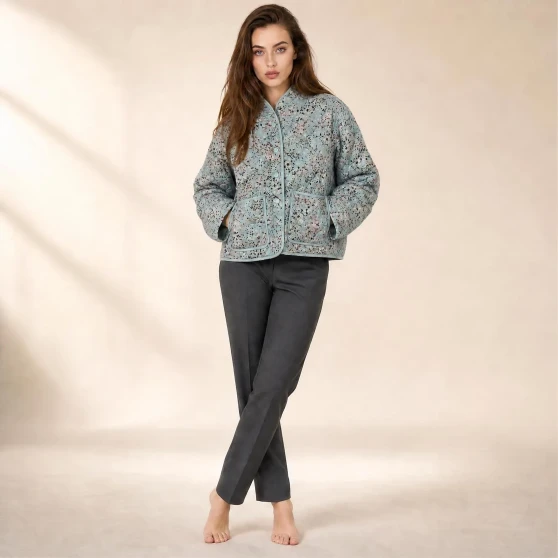

Sorona also brings a material story worth knowing. Its polymer is made with 37% annually renewable plant-based ingredients by weight. In insulation, Sorona fibers offer a light, resilient way to add warmth. In Esme's shell blend, the emphasis is softness, comfortable stretch, and recovery. The same material family can contribute to very different experiences of a coat.
The small details belong to the design
A collar should feel comfortable near your face. A hood should let you turn your head. A pocket should be a pleasure to put your hand into. A waist adjustment should give you a shape you enjoy.
These are things to try when you put a coat on. They connect the way it looks to the way it fits into your day.
Choose the combination that feels like you
Start with the fabric and silhouette you are drawn to, then consider warmth, weather protection, and fit. Explore our midweight jackets and winter coats, or talk with us about what you are looking for.
A thoughtfully made coat gives you several reasons to keep reaching for it. The beauty is in how they come together.